

When work opens a ceiling or wall in an older West Toronto home, you may find knob-and-tube wiring: conductors held apart from framing by ceramic knobs and routed through ceramic tubes. Finding it can affect the renovation plan, but its presence alone does not tell you whether the wiring is active or unsafe. An electrical assessment can help establish its condition and what the planned work may require.
This guide explains what homeowners should ask an electrician and insurer, what can affect replacement costs, and why it is useful to discuss the electrical scope before renovation work begins.
Why So Many Old Toronto Houses Still Have It
The Electrical Safety Authority (ESA) describes knob and tube as a wiring method used in homes from the early 1900s to the 1940s. Its overview of knob-and-tube wiring explains how ceramic knobs hold conductors away from framing and ceramic tubes protect them where they pass through joists or studs.
The conductors were installed apart from each other, with open air around them. The system does not include an equipment-grounding conductor like modern wiring. A house may have been partly rewired over time, so an updated panel does not by itself confirm what wiring remains in the walls, attic, or ceilings.
If you are planning insulation work, do not assume existing wiring can be covered. Natural Resources Canada advises keeping insulation away from old knob-and-tube wiring because contact can create a fire hazard. (guidance on insulation and old knob-and-tube wiring) Have a qualified electrical contractor assess the wiring before insulation is installed.
Is Knob and Tube Wiring Legal in Ontario?
Existing knob-and-tube wiring is not automatically required to be removed solely because it is old. ESA says Ontario’s Electrical Safety Code is not retroactive, and recommends that homeowners with this wiring arrange an assessment by a Licensed Electrical Contractor (LEC). The condition of the wiring, the planned work, and your insurer’s requirements all affect what happens next.
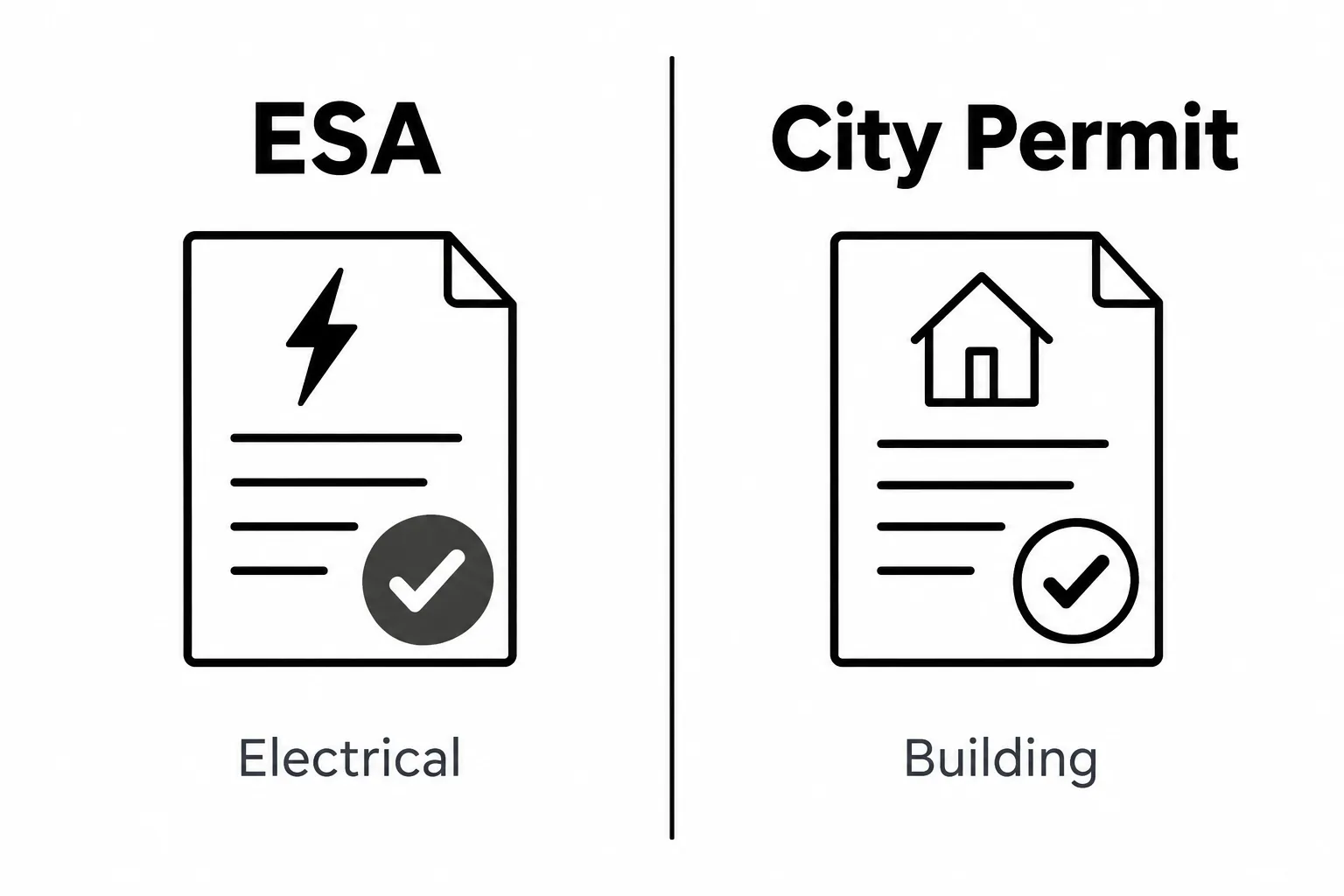
If a renovation involves new or altered electrical wiring, almost all electrical work must be reported to ESA through a notification of work. The ESA notification and inspection guide explains that the person doing the work files the notification before starting. Homeowners may file for work they do themselves; if they hire someone, that person must be a Licensed Electrical Contractor.
An ESA notification is not the same as a City of Toronto building permit. Depending on the project, you may need one or both. Ask the LEC and your renovation team which approvals apply to your plans.
What Can Make Existing Wiring a Concern?
Age alone does not tell you the condition of a particular installation. An LEC can check for issues such as:
- Deteriorated insulation: older cloth or rubber covering may be damaged or brittle.
- Insulation around active wiring: Natural Resources Canada advises keeping insulation from contacting knob-and-tube wiring.
- Changes made over time: improper splices or alterations may affect safety and the work that can be done.
- Circuits carrying more demand than intended: an electrician can assess whether existing circuits suit the home’s current use and planned renovation.
- Lack of an equipment-grounding conductor: knob-and-tube wiring does not provide the same grounding feature as modern wiring.
Do not try to identify active circuits or judge their condition from a visual check. Ask an LEC to assess them.
Active vs. Disconnected Wiring: What the Assessment Should Confirm
Older homes may contain a mix of wiring installed at different times. Ask the Licensed Electrical Contractor to identify which knob-and-tube conductors are active, which are disconnected, and what the proposed renovation will affect.
Do not rely on an old panel label or visible wire ends to decide that a circuit is disconnected. Ask for the electrician’s findings and recommended scope in writing, and check whether your insurer has separate requirements.
Insurance Is Often Part of the Decision
For many homeowners, the trigger is an insurance renewal or a request for more information about the electrical system.
Requirements vary between insurers. The Insurance Bureau of Canada’s guidance on home insurance rates says insurers may ask about knob-and-tube wiring and may require updated wiring, a minimum service capacity, or an electrical inspection. Contact your insurer or broker directly and ask what documentation and work they require for your specific policy.
If the insurer requires replacement by a set date, get that deadline in writing and give it to the LEC and renovation team before confirming the project schedule.
What a Knob and Tube Replacement Involves
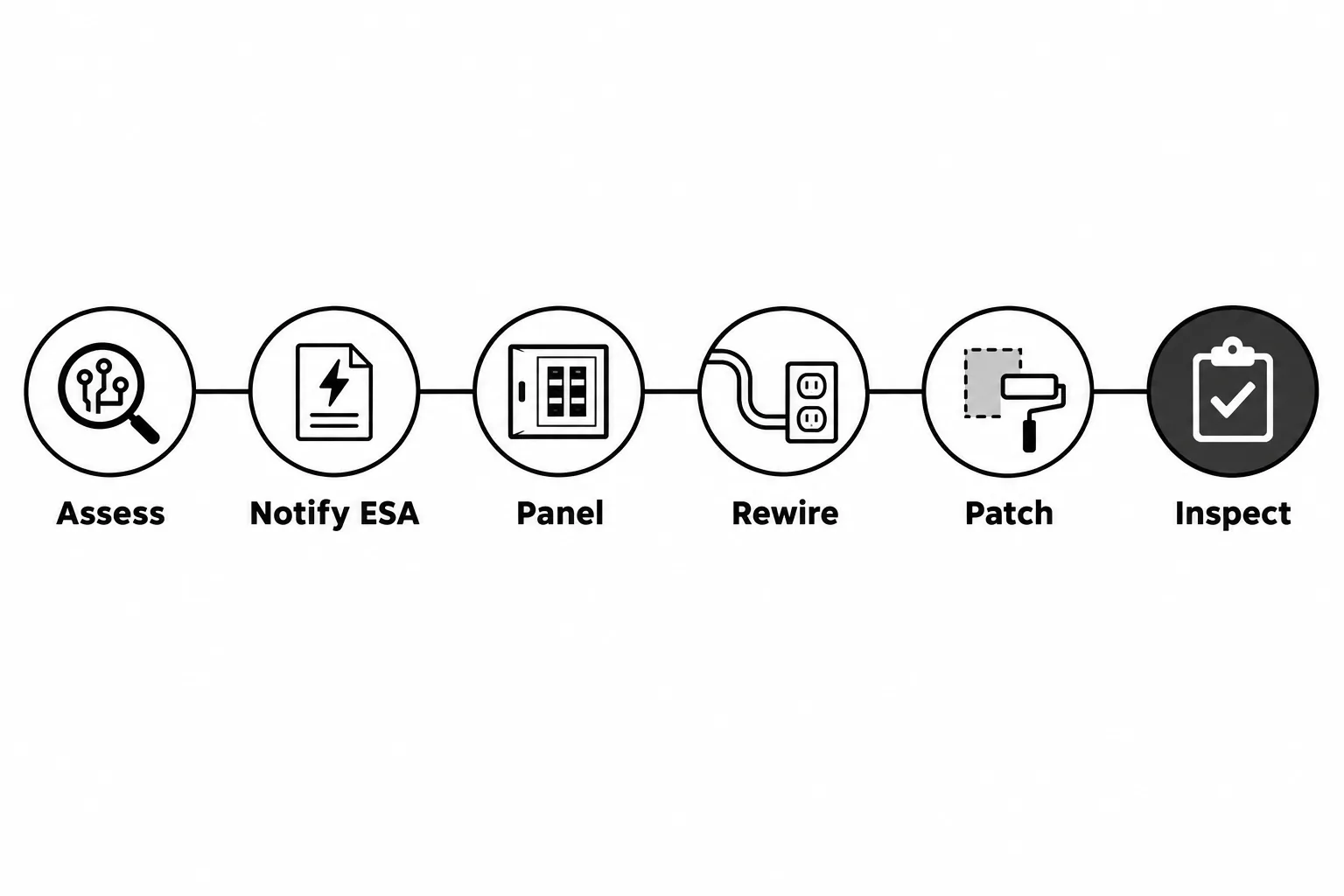
- Electrical assessment and circuit mapping. An LEC determines what wiring is present, which circuits are active, and what the proposed work affects.
- ESA notification. The person doing the electrical work files the required notification before the work begins.
- Panel and service review. The LEC checks whether the existing electrical service can support the planned work and advises whether an upgrade is needed.
- New wiring and devices. The electrical contractor confirms the replacement scope, wiring routes, outlets, switches, and any additional circuits with you.
- Opening and repairing finishes. The quote should state who is responsible for opening and repairing walls or ceilings, priming, painting, and trim.
- Inspection and records. Ask what inspections apply and keep the resulting ESA paperwork. When work has passed ESA review, the person who filed the notification receives a Certificate of Acceptance, which can be useful for insurance and resale records.
What Affects Knob and Tube Rewiring Cost in Toronto?
There is no reliable flat price based on square footage alone. A useful estimate needs a clearly defined electrical scope and assumptions, so ask an LEC for a written estimate that explains:
- How much wiring is active and included in the work
- The number of floors and how accessible the wiring is
- Whether the home has plaster and lath, drywall, or finishes that need extra care
- Whether an electrical panel or service upgrade is recommended
- Whether ESA fees and inspections are included
- Who will repair, prime, and paint opened walls or ceilings
- Whether the quote covers the full home or only specific rooms or circuits
Compare estimates with the same scope. A quote that excludes wall repairs or only covers accessible wiring is not directly comparable to a full replacement quote. Ask the electrician to explain what is included, what remains, and what conditions could change the price.
Why Rewiring During a Renovation Can Reduce Rework
If a larger renovation already opens walls or ceilings, the electrician may have easier access to wiring routes, and some opening or finish repairs may overlap with the construction work. That can reduce duplicated disruption, but it does not guarantee a lower total price. Ask for the electrical work and finish repairs to be itemized so you can compare the renovation option with a separate rewire.
If you are planning a whole-home project, review Ashford Homes’ whole-home renovation service and discuss how electrical work fits the overall scope, schedule, and finish repairs. Keep the electrical estimate and ESA responsibilities clear as a separate part of the project.
A project that includes underpinning, an addition, or a conversion to multiple units may also affect the electrical plan. The LEC should assess the home and proposed drawings; do not assume that every existing wire must be replaced or that a full rewire is automatically required.
Selling a Toronto Home With Knob and Tube: What to Check
Knob-and-tube wiring can affect a buyer’s inspection and insurance discussions. The specific effect depends on the condition of the wiring, the buyer’s insurer, and the facts of the sale. Keep any electrical assessment and ESA documents, and ask your lawyer or real estate professional about disclosure requirements for your situation.
Are Rebates or Grants Available for Knob and Tube Removal in Ontario?
Program rules change, and an energy-efficiency rebate should not be assumed to cover electrical rewiring. Check the current eligibility rules on the relevant official program page before including any rebate in your budget. Ontario’s home energy savings information is a starting point for checking current home-energy programs; confirm whether the exact work you plan to do qualifies.
How to Choose Who Does the Work
- Confirm that the electrical contractor is licensed in Ontario.
- Get the full or partial replacement scope in writing, including what active wiring will remain.
- Ask who files the ESA notification, requests inspections, and gives you the final documents.
- Confirm who is responsible for drywall or plaster repair, priming, painting, and trim.
- Ask your insurer what proof it needs and by when.
- If the electrical work is part of a larger renovation, confirm how the electrician, renovation contractor, approvals, schedule, and finish repairs will fit together.
Ashford Homes is a West Toronto design-build renovation firm. Emmett Ashford has worked in renovation since 2001, and Ashford Homes has completed more than 100 homes in the area. The company is BCIN licensed for its design and permit work; that is separate from the electrical contractor’s licence required for hired electrical work. Ask who will carry out the electrical work and how it will be coordinated with the wider renovation.
Ashford’s renovation process includes consultation, design and planning, a written scope and schedule, construction, and a five-year warranty. You can learn more about the Ashford renovation process.
FAQs
Related readingHow to Choose a Renovation Contractor in TorontoRead the guide →Frequently asked questions
Does knob and tube wiring have to be removed in Ontario?
Can I renovate a house that still has knob and tube wiring?
How much does it cost to replace knob and tube wiring in Toronto?
Can I live in the house during rewiring?
Do I need to replace the electrical panel too?
Will the walls need repainting after the wiring is replaced?
Planning a Renovation on an Older West Toronto Home?
If knob-and-tube wiring has been found during an inspection or renovation planning, start with an electrical assessment and your insurer’s written requirements. If the work is part of a larger home renovation, plan the electrical scope before finishes and schedules are finalized.
Ashford Homes brings design, building-permit applications, and construction together for West Toronto renovation projects. The team uses JobTread for project communication and tracking, and its renovation work is backed by a five-year warranty. For the electrical portion, confirm the LEC’s scope and documentation separately.
If you are planning a larger renovation, book a free consultation with Ashford Homes to discuss the overall project and timing.