
A Toronto renovation is a five- or six-figure decision, and the contractor you hire shapes the outcome more than any tile, faucet, or countertop you’ll agonize over. The right one delivers on budget with few surprises; the wrong one leaves you with liens, half-finished rooms, and a legal headache. Choosing well comes down to a repeatable vetting sequence, scope, credentials, quotes, references, and a real contract. Here’s how to work through it.
Start With Scope and Budget Before You Call Anyone

Contractor conversations only get productive once you can say what you actually want. Before reaching out, define the rooms involved, your non-negotiables, the finishes you’re drawn to, and a rough budget ceiling. The sequence matters: figure out what you want first, then find someone to build it. Thinking through layout and design early, the kind of upfront architectural design and planning that anchors a successful renovation, means quotes come back comparable instead of scattered.
Budget realistically. The often-cited 30% rule is really two ideas: set aside a contingency of roughly 20–30% of your renovation cost for the surprises that older Toronto homes reliably deliver, and avoid over-investing far beyond a sane share of your home’s value in a single space. The Canada Mortgage and Housing Corporation publishes renovation planning and budgeting guidance that reinforces building a cushion into any project.
Is $100,000 enough to renovate a house? It depends entirely on scope. That figure can comfortably cover a quality kitchen or a couple of bathrooms; it goes fast on a full-home gut, structural changes, or an addition. Match your expectations to the project type rather than a round number.
Verify Licensing, Registration, and Insurance
Here’s the point that trips people up: Ontario has no single “general contractor license” required for most home renovations. Searching for one turns up confusion because that credential largely doesn’t exist for standard remodels. What is regulated are the specific trades and the permits.
Confirm these before signing anything:
- Electrical work must be done by a licensed contractor and inspected. The Electrical Safety Authority licenses electrical contractors, and you can verify a contractor’s standing directly.
- Building permits are required for structural changes, additions, and many layout alterations. The City of Toronto explains when a building permit is needed, a contractor who insists you don’t need one for load-bearing or plumbing changes is a warning sign.
- Workplace coverage protects you from liability if someone is hurt on your property. Ask for proof of active WSIB coverage, which you can validate through its clearance certificate tool, plus general liability insurance.
For major additions or substantial new construction, warranty obligations may come into play. The Home Construction Regulatory Authority licenses new-home builders and vendors in Ontario, relevant context if your project crosses into new-build territory.
Get Multiple Detailed Quotes, and Read Them Properly
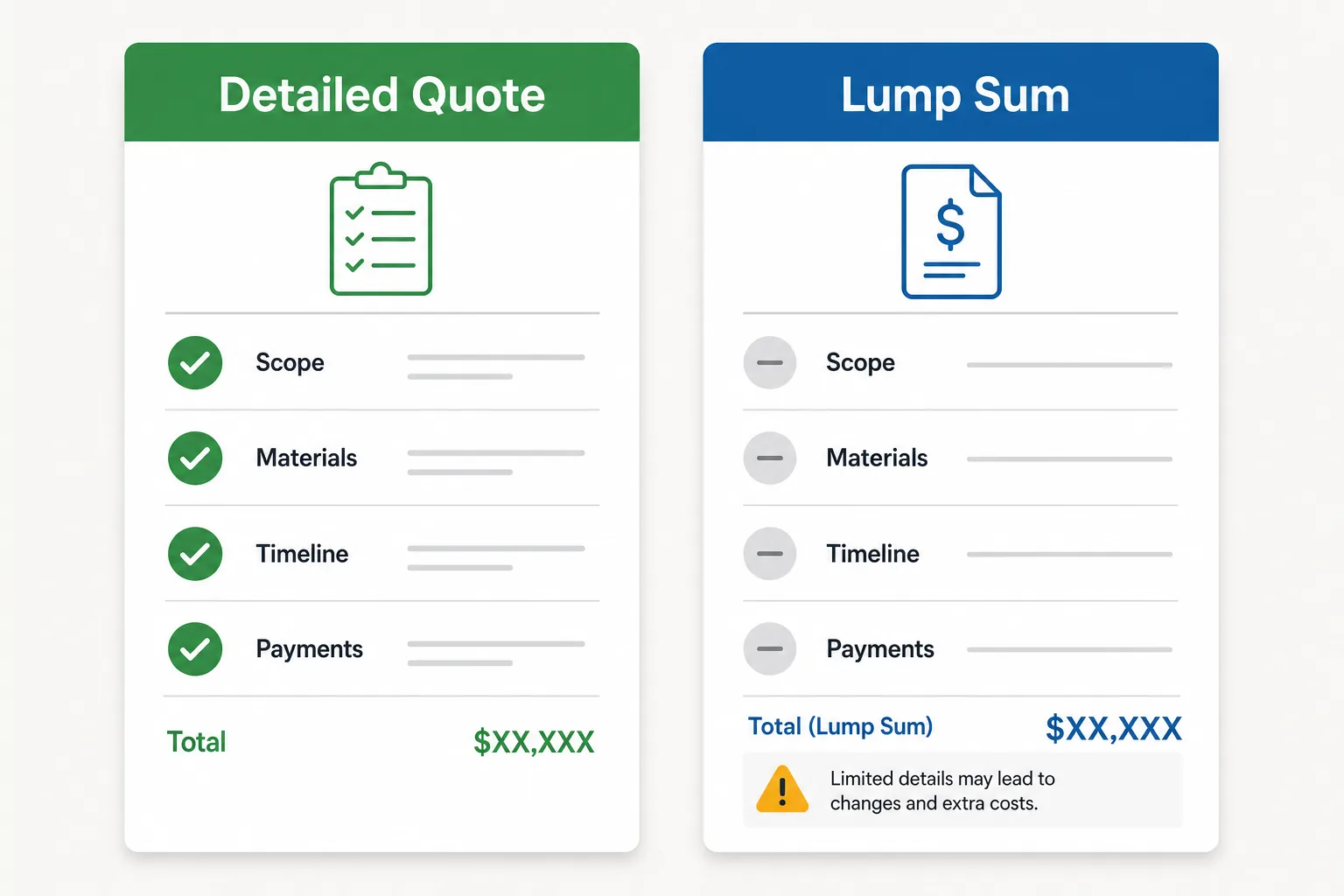
Get at least two to three independent written quotes. This does more than reveal price, it reveals how each contractor thinks about your project.
Compare them apples-to-apples. A serious quote breaks down scope line by line, specifies material allowances, names timelines, and lays out a payment schedule. A single lump sum with no detail tells you little and protects you even less. When one bid comes in dramatically lower than the others, treat it as a question, not a bargain, it usually signals missing scope, cheaper materials, or an intent to make up the gap through change orders later. Lowest price rarely equals best value.
When one bid comes in dramatically lower than the others, treat it as a question, not a bargain.
Check References, Reviews, and Real Past Work
Marketing is easy; a track record is not. Read reviews across multiple sources and weigh community threads critically, a single glowing or scathing post says less than a consistent pattern across dozens.
Go further than star ratings. Ask to speak with two or three recent clients and, if you can, visit a completed or in-progress site to judge finish quality firsthand. Look for a portfolio of comparable Toronto projects, because a condo, a detached house, and a century-old semi each demand different experience, a completed Roncesvalles home renovation tells you far more than a generic gallery of stock photos. And ask whether the work shown was actually built by the crew who’ll do yours.
Insist on a Written Contract and Clear Process
Never proceed on a handshake. A proper renovation contract spells out scope, total price, payment milestones tied to completed stages, timeline, a change-order procedure, cleanup responsibilities, and warranty terms on both labour and materials. A defined workflow matters as much as the paperwork, a transparent renovation process that warranties labour and materials signals a company that stands behind its work.
Be wary of large upfront deposits and cash-only arrangements. Reasonable deposits are normal, but paying most of the job before it starts hands away your leverage. Consumer Protection Ontario sets out your rights on home renovation contracts and cancellations, and it’s worth knowing them before you sign.
What Not to Tell, and What to Ask, Your Contractor
Keep a few things to yourself. Don’t reveal your absolute maximum budget, share a working range instead, or estimates drift upward to meet your ceiling. Don’t broadcast that you’ve fallen for one bidder before negotiations are done. Don’t hand over full or near-full payment early. And don’t let anything important stay verbal.
Then come armed with questions:
- Will the work be done by an in-house crew or subcontractors, and are the subs vetted?
- Who is my day-to-day point of contact or project manager?
- Who pulls the permits, you or me?
- Is this timeline realistic, and what happens if materials are delayed?
- How are change orders priced and approved?
Red Flags That Should End the Conversation
Some signals mean walk away, no matter how charming the pitch:
- Refuses to provide a written contract.
- Claims permits aren’t needed for work that clearly requires them.
- Can’t produce insurance or WSIB proof.
- Uses pressure tactics or “today only” pricing.
- Has no fixed business address or verifiable record.
- Communicates poorly before you’ve signed, it only gets worse afterward.
Toronto-Specific Considerations
A renovation here isn’t generic. Condo renovations carry their own layer of rules: most buildings require board approval, an engineer’s sign-off for anything structural or plumbing-related, restricted work hours, elevator bookings, and adherence to the building’s status certificate and declaration. Ask any contractor whether they’ve navigated a Toronto condo board before.
The city’s older housing stock, semis, Victorians, and post-war homes, brings knob-and-tube wiring, questionable past renovations, and surprises behind the plaster. Load-bearing changes need permits and often an engineer.
Finally, match the contractor to the project scale. A small bathroom refresh doesn’t need a firm geared for full-home gut jobs, and a whole-house renovation shouldn’t go to someone who only does quick cosmetic work. Right-sizing the relationship keeps both attention and pricing reasonable.
Frequently asked questions
What is the 30% rule for renovations?
Do I need a general contractor license to renovate in Toronto?
Is $100,000 enough to renovate a house in Toronto?
What should I not tell my renovation contractor?
How many quotes should I get?
The Bottom Line
Hiring well isn’t luck, it’s a disciplined process that protects a significant investment. Define your scope, verify credentials, gather detailed quotes, check real references, and put everything in a clear contract. If you’d like to talk through your project with a team that works this way, a consultation is a good place to start.
