

The short answer, before the details
There isn’t one best season for every Toronto renovation. Work exposed to weather, such as excavation, additions, or roof work, often benefits from milder conditions. Interior work can happen in more seasons once the home is enclosed and suitable for construction.
For a major project, the best time to build is not necessarily the best time to call. Design, permit review, and any other approvals can take months, so contact a renovation team well before your preferred construction start. The schedule depends on the house, the scope, and the approvals involved.
Three things decide your timing: weather, approvals, and how booked good crews are. This guide is about major work (whole-home renovations, additions and second-floor additions, basement underpinning, and single-family to multi-unit conversions), not a weekend of painting.
A quick timing guide by project
Use this as a starting point, not a promise of a specific start date. The right season depends on the site, the design, and any required approvals.
| Project | Construction timing to consider | What to plan for |
|---|---|---|
| Whole-home renovation | Weather-exposed work may suit warmer conditions; interior phases can continue once the home is enclosed. | Design, permits, existing-house conditions, and whether you will need to move out. |
| Addition or second-floor addition | Foundation, framing, and roof work need a site-specific weather and protection plan. | Zoning, permit review, structural design, access, and the time needed to close in the new space. |
| Basement underpinning | The work can be scheduled in different seasons, but excavation, concrete and temporary protection may affect timing. | Engineering, access, water management, permit requirements and household arrangements during construction. |
| Interior redesign or reconfiguration | May fit different seasons, depending on whether the work changes the structure or building systems. | Confirm the planned work first; a layout redesign may involve structural review, permits, and construction. |
| Single-family to multi-unit conversion | Interior work may be less weather-dependent, but the approval path and any exterior or structural work can shape the schedule. | Confirm zoning, the intended number of units, code requirements, and permit needs before setting a build date. |
Toronto’s renovation calendar, season by season
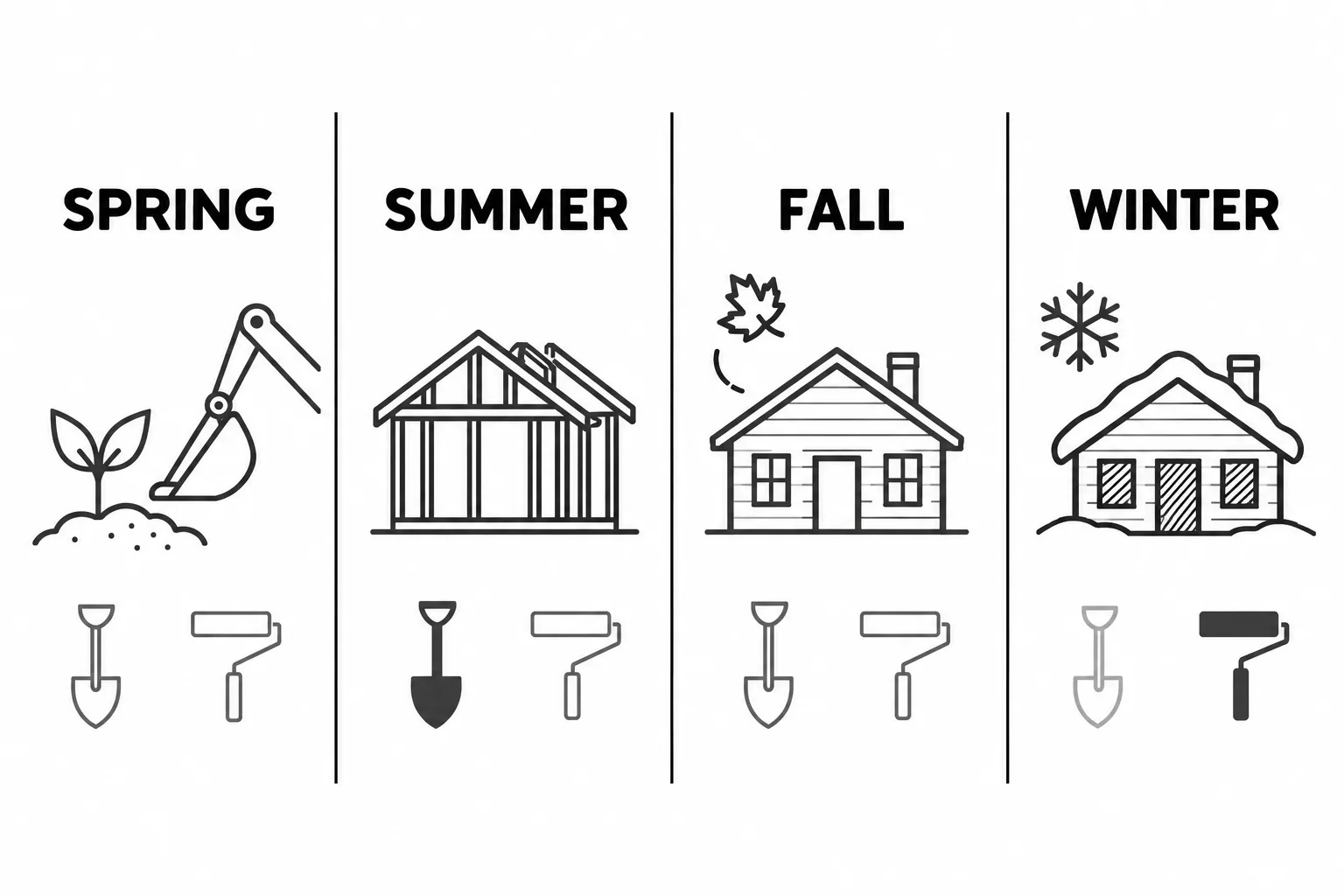
Spring (March to May): conditions and demand begin to shift
Spring conditions vary from month to month. As temperatures rise and the site dries, some excavation and foundation work may become easier to schedule, but the actual ground and weather conditions still matter. Spring can be a construction start for some projects; it is often too soon to begin planning a major project in March and expect work to start in April.
Construction noise must not be clearly audible during Toronto’s restricted hours: 7 p.m. to 7 a.m. Monday to Friday; before 9 a.m. or after 7 p.m. on Saturdays; and at any time on Sundays and statutory holidays, subject to approved exemptions. Check the City’s construction-noise rules when planning work in a close-knit neighbourhood.
Summer (June to August): the window for opening the house up
Summer can provide a useful weather window for additions, second-floor additions and roof work, but dry conditions are never guaranteed. Any phase that exposes the structure needs a plan to protect the house from weather. If a project involves major disruption, ask whether you can remain in the home during that phase.
Ashford Homes reports that summer is its quietest season for new inquiries. That describes inquiry patterns; it does not guarantee that design, construction or inspection schedules are less busy. Ask about current availability for each stage of your project.
Fall (September to November): the underrated start date
Fall can work well when exterior and shell work can be completed before winter conditions set in, with suitable interior work continuing after the building is enclosed. The amount of work that can continue depends on the project and site conditions. If you want an exterior construction start the following spring, begin discussing the project well in advance so there is time for design and approvals.
Winter (December to February): quieter than people assume
Interior work may continue during winter inside a heated, enclosed home. Excavation, foundation and concrete work can be more difficult in cold or wet conditions; temporary heat, enclosure and other protection may affect the schedule and cost. These decisions depend on the site and construction plan.
Winter can also be a useful time to assess the project, develop drawings and prepare permit applications. The start date still depends on the review and approval path, so do not assume construction can begin as soon as the weather changes.
Permits, zoning and approvals shape your start date
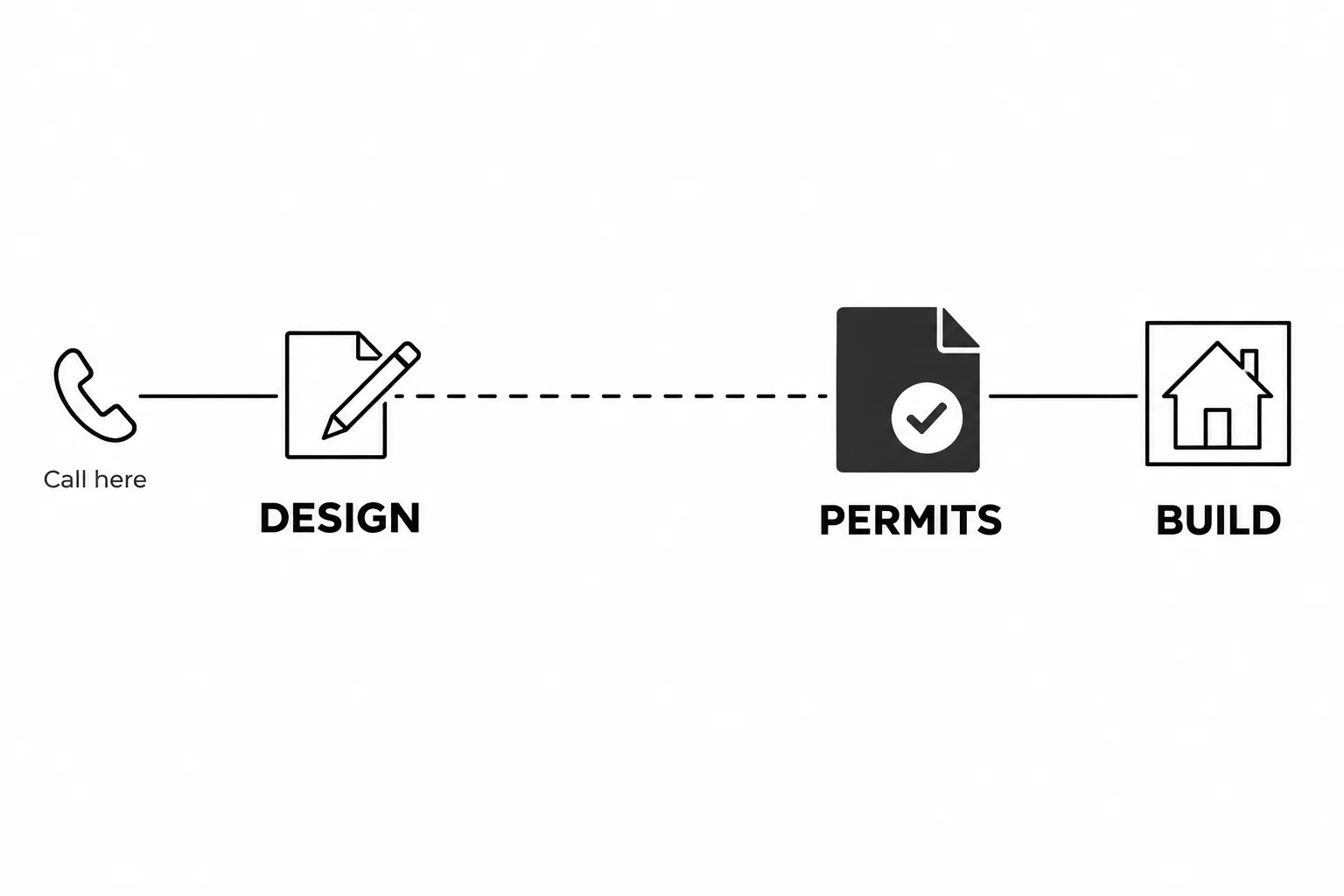
Weather affects some construction tasks, but the approval path can determine when construction is allowed to begin. Toronto says complete applications for houses with no more than two dwelling units are reviewed within 10 business days through the House Stream. Some eligible residential projects may qualify for Express Services, which has a three-business-day review goal. Eligibility and submission requirements vary by project. These are City review timeframes, not the full period from initial design through approvals and construction.
If a proposal needs a minor variance, the Committee of Adjustment process adds a separate hearing and review step. Check the current Committee of Adjustment hearing schedules as part of feasibility planning; the timing depends on the application and schedule.
Ashford Homes is BCIN licensed and handles design and permit applications in-house alongside construction. Its design-build process explains how the work moves from planning toward construction.
A practical rule: work backwards from the season you want to build in, rather than from the day you decide to renovate.
How long the build runs, and why that changes your ideal start
A whole-home renovation can span several seasons. Ashford Homes says full-home renovations in West Toronto typically take four to nine months, depending on scope and structural work; see its whole-home renovation service. Ask which project stages that estimate includes. Design, permit review, and any additional approvals have their own timelines before construction begins.
Once construction starts, the sequence often moves from structural and exterior work to plumbing, electrical, and heating-system rough-ins, then insulation, drywall, and finishes. The exact order depends on the design, and some phases can overlap. Weather, inspections, material availability, and existing conditions can all affect progress.
Does the season change what you pay?
There is no guaranteed cheapest season for a major renovation. The price depends on the scope, existing conditions, material selections, access, and the schedule. Cold-weather excavation or concrete work may require extra protection, which can add cost when needed. Ask what the estimate includes and how they handle weather-related work.
The expensive mistake is rushing to meet a preferred season. Give yourself time to settle the design and selections before construction. Ashford Homes provides a price and timeline before work starts and says it handles scope changes fairly as they come up.
Matching the season to your project
For a major project, plan around the work that must happen outdoors and start the design and approval conversation before that construction window. Some larger projects can take months from the first conversation to construction; Ashford’s experience is that a complex project can sometimes approach a year.
- Whole-home renovation: Discuss the scope and desired start well ahead of time. Exterior and structural phases may be scheduled for suitable weather, while interior phases can follow once the house is enclosed.
- Addition or second-floor addition: Start planning early enough to assess zoning, design, and permits before the weather-dependent construction work.
- Basement underpinning: Begin with a feasibility and structural review. The site, access, and protection plan matter more than picking a season by itself.
- Single-family to multi-unit conversion: Start with the intended unit layout and approval requirements. The permit path may have more influence on timing than the season.
Projects can also connect over time. An interior redesign may reveal that a family needs more usable basement space, or that a broader renovation would solve the layout problem better. A basement project may support potential rental use only when the home and unit meet the applicable requirements. Families may also return later for an addition as their needs change.
Frequently asked questions
Which month is the best to renovate a house in Toronto?
When should I contact a contractor for a summer renovation?
Can you renovate a house in Toronto during winter?
Is winter a cheaper time to renovate in Toronto?
In what order should you renovate a house?
Can I live in my home during a major renovation?
Start the conversation a season early
The homeowners who get the build season they want make room for planning before the crew arrives. Ashford Homes has worked in West Toronto for 25 years and completed more than 100 homes. One team handles design, permits, and construction; clients can follow progress and message the team through its project software; and the work is backed by a 5-year warranty.
If you are planning a major West Toronto renovation, book a free consultation to discuss the scope, approval path, and a realistic schedule.