
A renovation runs dozens of moving parts at once: trades booked weeks ahead, permits waiting on city approval, materials that arrive late, inspections that have to happen in the right order. The renovation project manager is the single point of accountability holding all of it together. This guide covers what they do day to day, how the role shifts across each phase, how it differs from a general contractor, what the job pays, and how to become one.
What Is a Renovation Project Manager?
A renovation project manager plans, coordinates, and oversees a renovation from concept to completion, keeping it on time, on budget, and to the agreed scope. They own the schedule, the money, and the communication.
That is different from a general contractor. A contractor executes the physical build, framing, drywall, running the crew on site. A project manager orchestrates the people, the timeline, the budget, and the flow of information between homeowner, trades, and inspectors. On larger jobs these are two distinct roles; on smaller residential renovations, one experienced person often wears both hats. The distinction matters at hiring time: you are paying a renovation project manager for coordination and oversight, not labour.
What Does a Renovation Project Manager Do Day to Day?
The role is less about swinging a hammer and more about keeping a complex operation aligned. The work spans several fronts.
Planning and Scoping the Project
Before anyone lifts a tool, the project manager defines the deliverables, builds the timeline, and sequences the trades. Good planning is what stops a plumber showing up before the framing is ready, or tile going down before the waterproofing is signed off.
Budgeting and Cost Control
They build the estimate, track spending against it, and manage change orders when scope shifts. When a homeowner decides mid-project to move a wall or upgrade finishes, the project manager prices the change, documents it, and keeps the budget honest.
Scheduling and Coordinating Trades
Electricians, plumbers, drywallers, painters, and cabinet installers each need to be on site at the right time and never in each other’s way. Coordinating stakeholders and trades is central, not a side task, research on the project manager’s role in relationship management identifies communication and coordination as core to whether projects succeed or stall.
Managing Permits, Codes, and Inspections
The project manager pulls the required permits, books inspections at the right milestones, and confirms the work meets local building codes. This is where experience pays off, knowing which jobs need a permit, and when an inspector has to sign off before the next stage can begin.
Communication and Client Updates
They are the homeowner’s single point of contact. Instead of chasing five trades for answers, you get one person who reports progress, flags problems early, and turns construction jargon into decisions you can actually make.
Risk, Problem-Solving, and Dispute Resolution
Renovations surface surprises, water damage behind a wall, a supplier backorder, knob-and-tube wiring nobody expected. The project manager triages the issue, finds a path forward, and settles conflicts between parties before they derail the timeline.
Quality Control and Documentation
Throughout the build they walk the site, hold trades to standard, build the punch list of fixes before closeout, and keep records of approvals, changes, and inspections. The U.S. Bureau of Labor Statistics describes construction managers as overseeing planning, budgeting, and coordination across the full life of a project, a fair summary of the renovation version.
You are paying a renovation project manager for coordination and oversight, not labour.
What a Renovation Project Manager Does During Each Phase
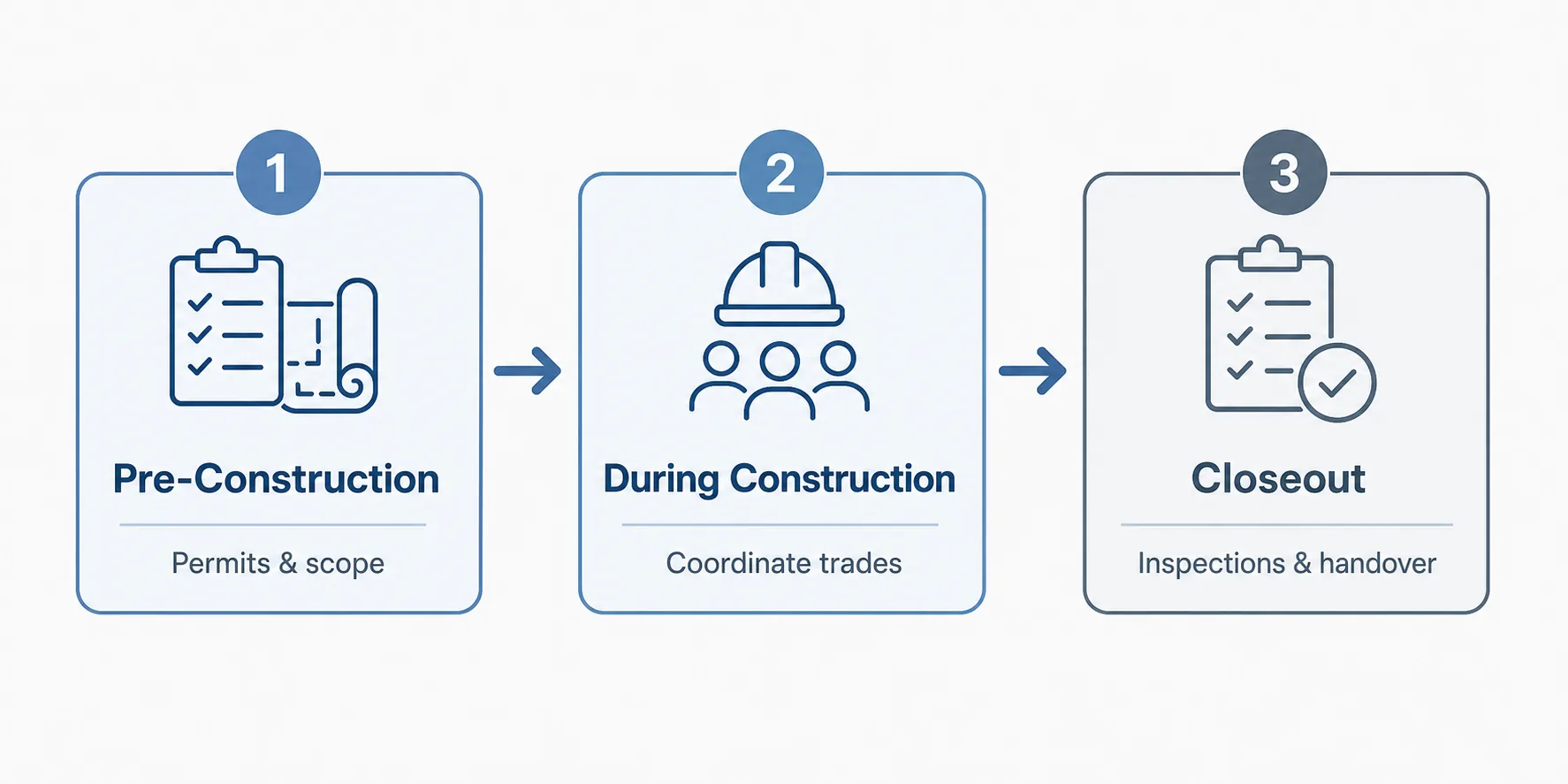
The duties above don’t all fire at once. They cluster differently depending on where the project stands.
| Phase | What the project manager focuses on |
|---|---|
| Pre-Construction | The planning-heavy stage: finalizing scope and budget, pulling permits, signing contracts with trades, and ordering long-lead materials so nothing stalls the schedule later. Decisions made well here save weeks down the line. |
| During Construction | The focus shifts to daily coordination and site supervision, the right trade on site, work to spec, problems triaged the moment they appear. The project manager fields questions, adjusts the schedule around delays, and keeps the homeowner informed. |
| Closeout | The project manager schedules final inspections, works through the punch list, hands over the finished space, and delivers documentation, warranties, approvals, records. A clean closeout separates a project that feels finished from one that drags on with loose ends. |
Renovation Project Manager vs. Construction Project Manager
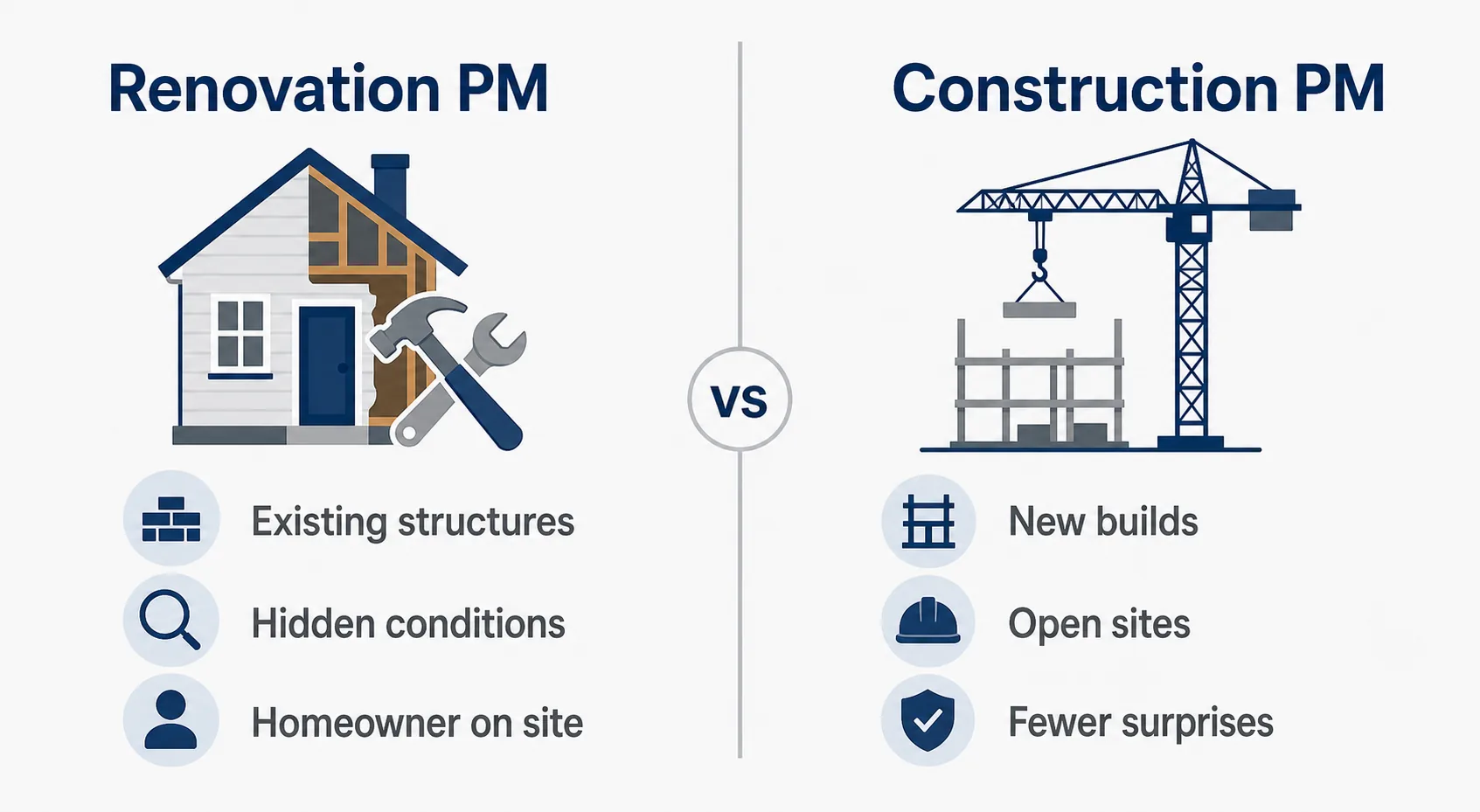
The two roles share a core skill set: scheduling, budgeting, coordination, risk management. The difference is context. A construction project manager may run new builds on open sites. A renovation project manager works inside existing, often occupied, structures, which brings tighter constraints: hidden conditions behind finished walls, the need to protect the parts of the home still in use, and closer, more frequent contact with a homeowner living through the disruption. Renovation work rewards adaptability and people skills as much as technical planning.
How Much Does a Renovation Project Manager Earn?
Pay varies by region, years of experience, the size and complexity of projects, and whether someone works in-house or independently. No single national figure fits every market. For a neutral benchmark on construction management pay and outlook, the U.S. Bureau of Labor Statistics Occupational Outlook Handbook publishes median wage data for construction managers, treat it as directional, since it reflects the broader field and numbers differ across markets and countries. Independent renovation project managers who run their own client base often price per project or as a percentage of construction cost rather than a flat salary.
How to Become a Renovation Project Manager
There is no single mandatory path, good news if you are coming from a trade or switching careers.
Education and Background
Many renovation project managers come up through the trades, then move into coordination as they take on more responsibility. Others enter through a construction management degree or diploma. The University of San Diego’s guide to becoming a construction project manager lays out a common progression combining education, on-site experience, and professional credentials.
Getting Started Without Prior Experience
With no direct experience, the most reliable entry points are hands-on: working a trade, then stepping into a site coordinator or assistant project manager role. Transferable skills, logistics, operations, scheduling, budgeting, carry real weight. As with the broader duties of a project manager, employers care as much about your ability to organize people and timelines as about a specific certificate.
Skills That Matter Most
The strongest renovation project managers are relentlessly organized, clear communicators, comfortable with budgets, and calm when a project hits the inevitable snag. Technical construction knowledge matters, but coordination and communication separate a good manager from a great one.
When Should a Homeowner Hire a Renovation Project Manager?
Not every job needs one. Swapping a vanity or repainting a room usually doesn’t. The value climbs fast once a project involves multiple trades working in sequence, structural changes, a fixed timeline, or a homeowner who can’t be on site every day to make decisions and catch problems. If your renovation touches several rooms, requires permits and inspections, or you simply don’t have the hours to manage a rotating cast of trades, a dedicated project manager is often what keeps the work on schedule and on budget.
Frequently asked questions
What does a renovation project manager do in real life (the honest version)?
Is a renovation project manager the same as a general contractor?
Do I need a project manager for a small renovation?
Can you become a construction project manager without experience?
The Bottom Line
A renovation project manager is the accountability hub of a reno, the one person responsible for keeping trades, budgets, permits, and communication aligned from first plan to final handover. Whether you are weighing whether to hire one or considering the role as a career, the value is the same: fewer surprises, tighter timelines, and a finished space that matches what was promised. If your renovation is complex enough to need that oversight, professional renovation management is worth the conversation.
