
The contract decides who pays when a renovation goes sideways, a missed deadline, a surprise invoice, a fixture that never arrives. It isn’t paperwork you sign to get started. It’s the one document you’ll reach for when something goes wrong. In Ontario, a written agreement isn’t optional for a meaningful job: under the Consumer Protection Act, 2002, consumer agreements above a modest dollar threshold must be in writing to be fully enforceable. Here’s a scannable checklist of what a solid contract must contain, and the warning signs worth walking away from.
Why the contract matters more than the quote
A quote is a price. A contract is the rulebook, it governs scope, changes, payment, insurance, and how disputes get settled. Two contractors can hand you the same number and mean wildly different things by it. The clearer the paperwork, the fewer surprises mid-build, which is exactly why it should map to a clearly defined renovation process rather than a handshake and a start date.
What a good Ontario renovation contract must include
The basics: legal names, addresses, licensing, and dates
The full legal business name (not just a brand), the contractor’s HST registration number, the site address, and both a start date and a substantial-completion date. Vague timelines are where accountability quietly disappears.
A detailed scope of work
The contract should describe what is actually being built, materials, brands, model numbers, and finishes, plus what is explicitly excluded. Drawings, specifications, and permit responsibilities belong in named attachments, not memory.
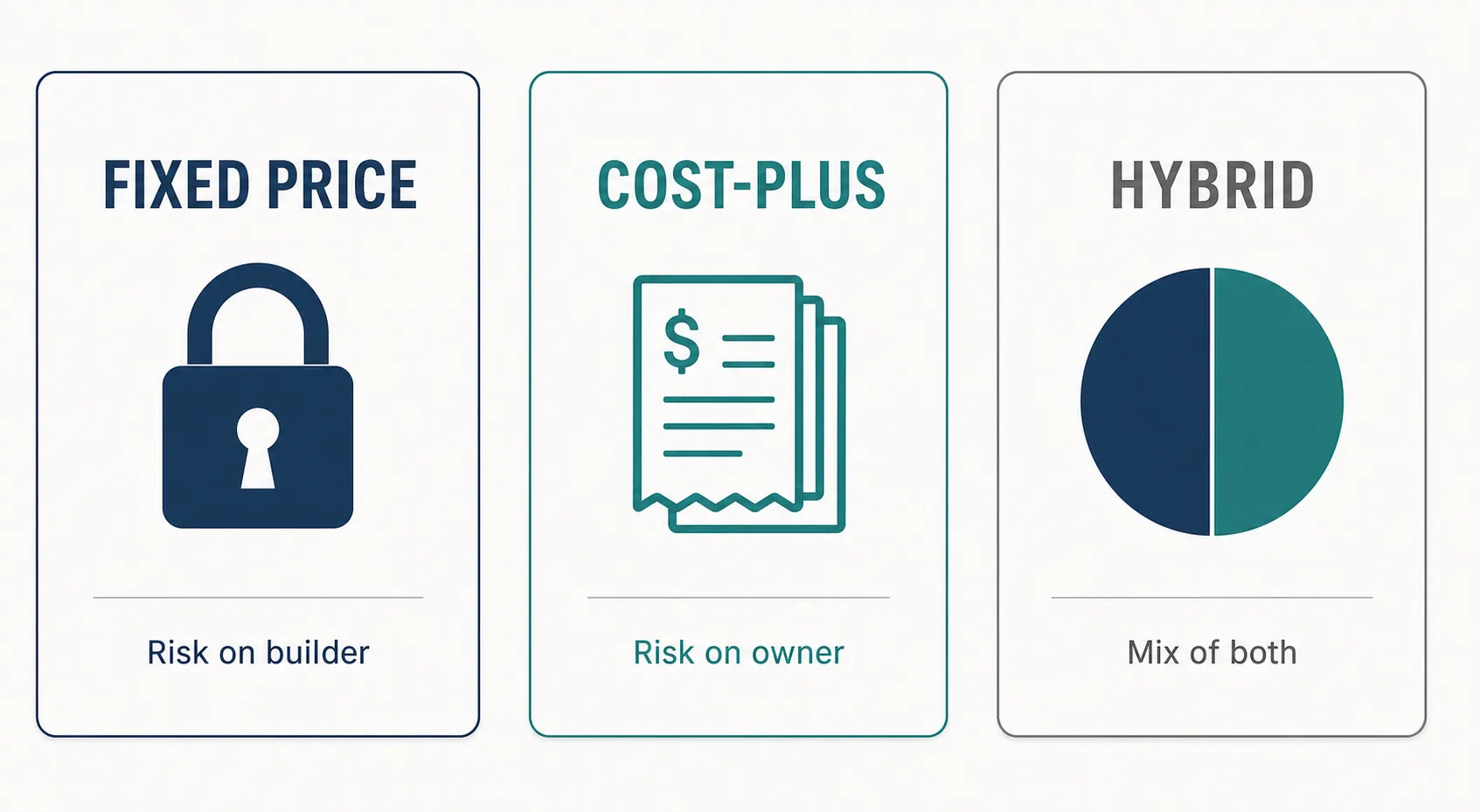
Price structure: fixed price, cost-plus, or hybrid
| Price structure | Who carries cost risk | What it offers |
|---|---|---|
| Fixed price | The contractor | A single set price |
| Cost-plus (materials and labour plus a fee) | You | Transparency |
| Hybrid | Split | Fixes some elements and leaves allowances for others |
None is wrong. You just need to know which one you’re signing.
Allowances and selections
Allowances are placeholder budgets for items you haven’t chosen yet, tile, plumbing fixtures, countertops. This is where budgets quietly balloon. Each allowance should list a dollar figure and state that overages or savings are reconciled in writing.
Change orders
Every change should be documented, priced, and signed before the work proceeds. Change orders are the most common source of renovation disputes.
A contract with no written change process is a contract built for conflict.
Payment schedule and deposits
Progress draws should be tied to real milestones, framing complete, drywall complete, not the calendar. Expect a reasonable deposit, not a demand for most of the money up front, and make sure the contract defines what “complete” means. A legitimate contractor charges and remits HST; you can confirm registration obligations through the Canada Revenue Agency.
Insurance, WSIB, and warranty clauses to verify
This is where many contracts, and many homeowners, get thin. Confirm the contractor carries commercial general liability insurance. Confirm workers are covered by the Workplace Safety and Insurance Board, or that the contractor holds valid independent-operator status; you can request a clearance certificate through the WSIB. And insist on a written warranty on labour and materials, with a stated duration, so a callback six months later isn’t a negotiation.
Your rights: deposits, cancellation, and cooling-off periods
Ontario gives consumers real protections. Certain agreements, particularly direct agreements signed away from a contractor’s usual place of business, carry a 10-day cooling-off period during which you can cancel without penalty, and other contracts can be cancelled if the business fails to meet its disclosure obligations. Consumer Protection Ontario explains these cancellation rights and how to file a complaint. “Buyer beware” still applies: verify the business is properly registered and reputable before you hand over a deposit.
Red flags: when to slow down before signing
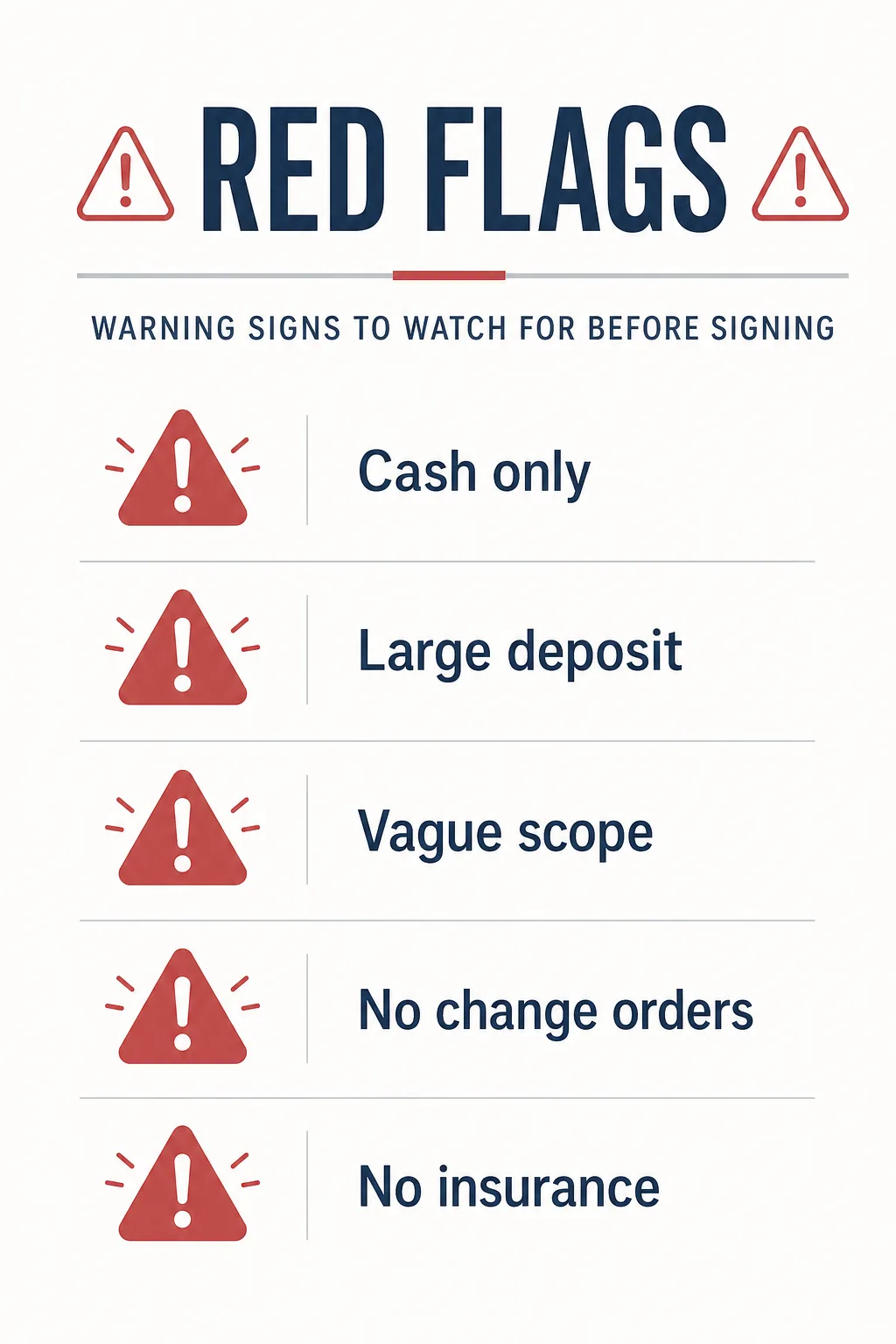
- Cash-only pricing or no HST charged
- A large upfront deposit, more than a modest percentage
- Vague scope, or “we’ll figure it out as we go”
- Verbal promises that never make it into the document
- No written change-order process
- Pressure to sign immediately
- No proof of insurance or WSIB coverage
A pre-signing checklist you can screenshot
- Full legal name, address, and HST number
- Site address and clear start/completion dates
- Detailed scope, with exclusions and drawings attached
- Stated price structure (fixed, cost-plus, or hybrid)
- Documented allowances with reconciliation terms
- Written change-order process
- Milestone-based payment schedule and reasonable deposit
- Proof of liability insurance and WSIB clearance
- Written warranty on labour and materials
- Permit responsibility spelled out
Scope and permitting language matter most on complex projects. On a three-storey renovation that preserved a basement apartment’s legal status, for instance, the outcome hinges on getting those clauses exactly right.
Frequently asked questions
Does a renovation contract have to be in writing in Ontario?
Is there a free renovation contract template for Ontario?
How much deposit is normal for an Ontario renovation?
Can I cancel a signed renovation contract in Ontario?
A good contractor welcomes a thorough contract, it protects both sides. If you’re weighing a project and want a clear, detailed agreement from the start, we’re happy to talk it through.
