
For most homeowners, how much does basement underpinning cost in Toronto comes down to one hard truth: there is no safe, honest price without knowing the house. A small detached home with clear access and dry soil is one story. A century-old semi with shared walls, low ceiling height, old drains, and a high water table is another.
In 2026, basement underpinning in Toronto often lands between $50,000 and $120,000+ for a serious basement-lowering project. A more complex job with waterproofing, plumbing, sump pump work, backwater valve installation, new slab, insulation, legal basement planning, and finished living space can climb higher. Some contractors price structural underpinning by linear foot, while full basement lowering projects are often discussed by square foot.
In this article, we will discover how much basement underpinning costs in Toronto, what affects the price, how underpinning compares with bench footing, what hidden costs to expect, and how to plan a safer basement lowering project without being caught off guard by vague quotes.
How Much Does Basement Underpinning Cost in Toronto?
The typical answer to how much does basement underpinning cost in Toronto is usually somewhere between $350 and $600+ per linear foot for structural underpinning, or roughly $80 to $150+ per square foot when people talk about the broader basement lowering scope. For many Toronto homes, that puts the total project cost between $50,000 and $120,000+, depending on basement size, access, soil conditions, lowering depth, engineering drawings, waterproofing, and finish level.
That range may look wide, but it reflects how these projects work in real life. Underpinning basement work is not a product pulled from a shelf. It is a staged construction process under an existing house. The crew has to excavate below the foundation in controlled sections, support the structure, pour new footings, remove soil, manage drainage, and rebuild the basement floor at a lower level.
Underpinning is described as work that increases the depth of an existing foundation by placing new footings below the existing ones. The city also states that residential underpinning requires a building permit, which means the project has to be reviewed before construction starts.
| Basement Underpinning Scope | Typical Toronto Price Range | What the Price Usually Covers |
| Structural underpinning only | $350–$600+ per linear foot | Staged excavation below foundation walls, new concrete footings, structural labour, and basic engineer review |
| Basement-lowering shell | $50,000–$90,000+ | Underpinning, soil removal, rough excavation, new slab preparation, drainage basics |
| Underpinning with waterproofing and drainage | $70,000–$120,000+ | Structural work, waterproofing, sump pump, backwater valve, weeping tile, slab replacement |
| Finished basement after underpinning | $120,000–$200,000+ | Lowered floor, framing, insulation, electrical, plumbing, HVAC, drywall, bathroom, flooring, lighting |
| Legal basement or rental-suite direction | $150,000–$250,000+ | Underpinning plus code-related work, egress, fire separation, mechanical upgrades, plumbing, and suite layout |
The cheapest number is rarely the full number. A quote for underpinning basement cost may not include finishing, waterproofing, drain upgrades, engineering drawings, permits, plumbing rough-ins, or restoration.
That is where homeowners get caught. One contractor may quote the structural shell. Another may quote the entire finished space. On paper, one looks cheaper. In practice, they may not be pricing the same job.
Why Basement Underpinning Toronto Cost Varies So Much
The cost of basement underpinning in Toronto depends on the house and it depends on the contractor. Toronto has thousands of older homes with low basements, tight side yards, older drains, mixed foundation types, and renovation histories that are not always documented. That creates uncertainty below grade.
A homeowner may want one extra foot of ceiling height. Another may want to lower the basement floor enough to create a comfortable family room, bathroom, laundry area, office, gym, or legal basement suite. The deeper the dig, the more soil has to come out. More soil means more labour, more disposal, more structural review, and more time.
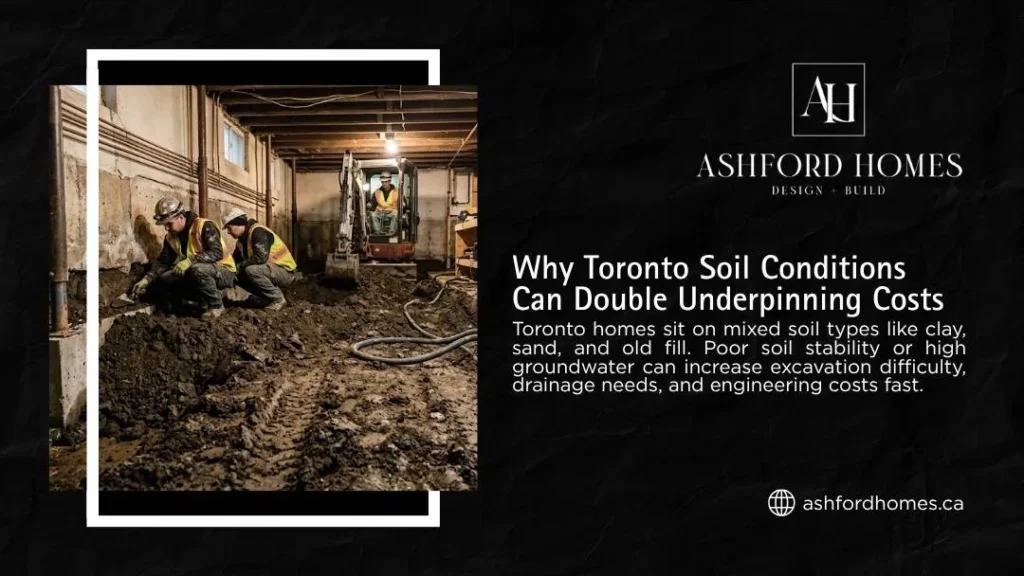
Soil conditions also matter. Clay, sand, old fill, groundwater, and weak bearing conditions all affect project cost. A high water table can push the budget higher because drainage and waterproofing become harder to ignore. If water is already entering the basement, the contractor has to think beyond the new concrete floor. The long-term goal is a basement that stays dry, not just a basement that looks good for the first few months.
Foundation walls are another major factor. Poured concrete, block, brick, stone, and mixed older foundations behave differently. Some homes may also need new posts, beams, drain work, or structural repairs before the basement can be lowered safely.
Toronto’s permit requirements add another layer. The City of Toronto asks for drawings that show existing and proposed construction, floor-to-ceiling heights, footing and foundation wall details, the depth of underpinning proposed, and related structural information. That paperwork is not decoration. It tells the city and the engineer how the house will be supported during and after construction.
Cost to Lower Basement Floor: What Homeowners Are Really Paying For
The cost to lower basement floor levels is not just the cost of digging. That point matters because many homeowners picture a crew removing dirt and pouring concrete. Underpinning is much more controlled than that.
A typical project starts with site review, measurements, engineering drawings, and permit preparation. Once the permit is in place, the contractor removes the existing basement floor, excavates in sections, and completes underpinning in a staged sequence. Soil is removed, new footings are poured, drainage is addressed, waterproofing is installed where required, and the new slab is prepared and poured.
K.H. Davis Engineering explains the process in plain language and notes that underpinning is completed before the basement is dug out, so the foundation is not undermined. “The process is very labour-intensive, and typically costs around $400 per linear foot of foundation wall to be underpinned.”
That expert point helps explain why a serious underpinning basement quote should not sound casual. The work is slow because it has to be slow. The home is sitting above the excavation. A rushed job can place the structure at risk, especially in older homes or homes with shared foundation conditions.
| Cost Driver | Why It Changes the Price | Budget Impact |
| Basement size | More square foot area means more excavation, soil removal, slab work, and finishing | High |
| Foundation perimeter | Underpinning cost per foot is tied to the length of the foundation walls | High |
| Lowering depth | More depth increases soil removal, concrete, labour, and engineering attention | High |
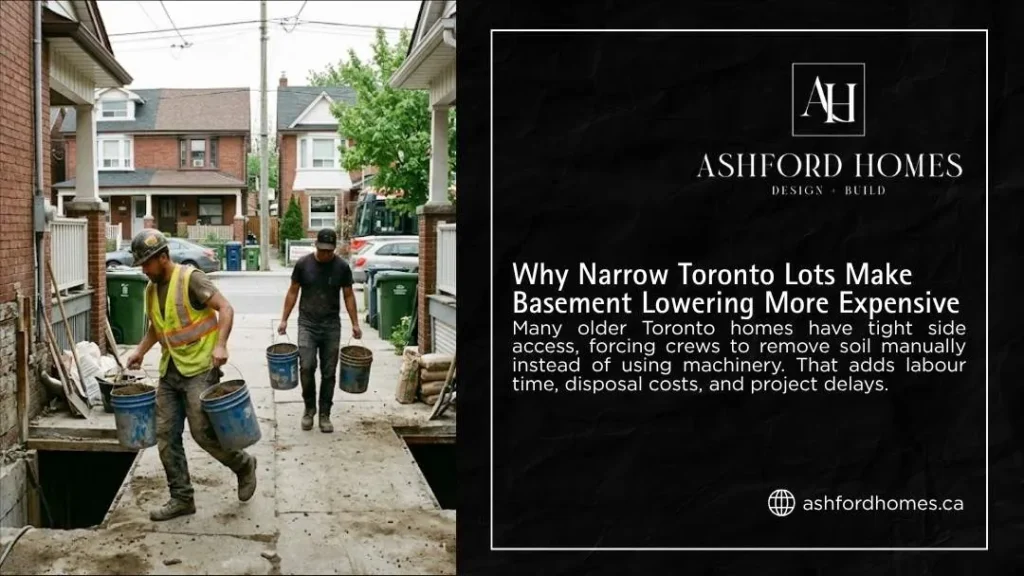
| Access to the site | Tight Toronto lots often slow down soil removal and material handling | Medium to high |
| Soil conditions | Poor soil, groundwater, or old fill can change the method and schedule | Medium to high |
| Engineering drawings | Required for structural design, permit review, and safe execution | Medium |
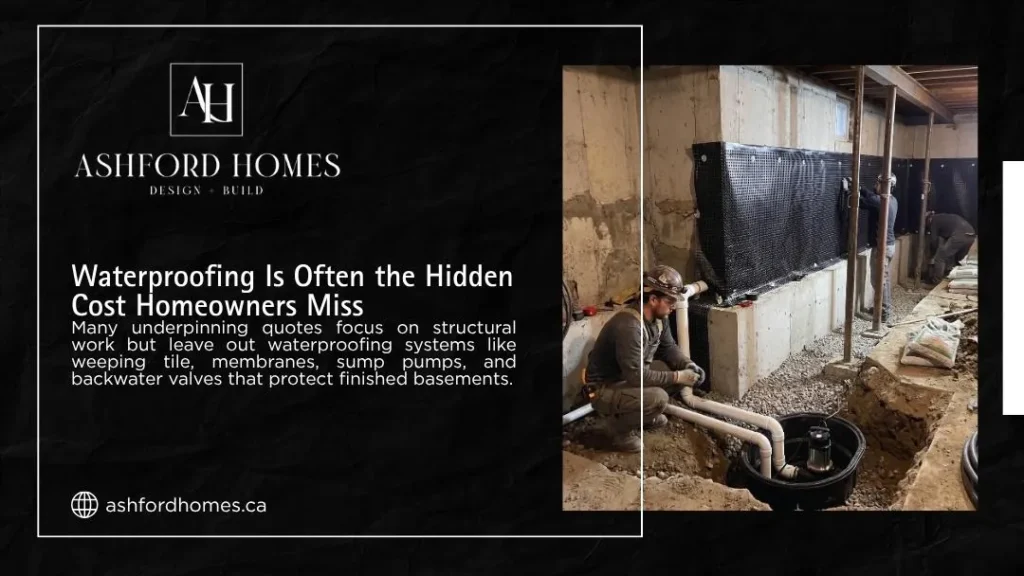
| Waterproofing | Often smart to add while the basement is open, especially in older homes | Medium to high |
| Plumbing and drains | Bathrooms, laundry, kitchens, and rental-suite layouts need more work | High |
| Finish level | Drywall, flooring, lighting, bathrooms, millwork, and HVAC shift the budget sharply | High |
This is why how much does basement underpinning cost in Toronto should never be answered with a flat number. A proper price needs a defined scope.
Underpinning Basement Cost Per Foot vs. Cost Per Square Foot
Underpinning basement cost can be priced two different ways, and that often confuses. Structural underpinning is commonly priced by linear foot. That means the contractor looks at the length of the foundation walls being underpinned. For example, a house with a 100-foot foundation perimeter might be priced around that perimeter, not just by the open floor area inside the basement.
On the other hand, Basement lowering is often understood by square feet because the homeowner is thinking about usable space. If the basement is 800 square feet, the cost per square foot helps explain the broader project. That number may include slab work, drainage, waterproofing, insulation, and sometimes rough finishing, depending on the quote.
Some Toronto contractors publish much lower or much higher numbers because they define the scope differently. For example, basement underpinning in Toronto is often priced between $70 and $150 per square foot in 2026, with many homeowners paying $35,000 to $85,000 depending on depth, soil conditions, engineering requirements, permits, and upgrades. Structural estimates may also be calculated at around $400 per linear foot of foundation wall.
Both numbers can be useful, but only if the homeowner knows what is included. The lower basement floor cost may look manageable at first, but it can climb once waterproofing, drains, plumbing, backwater protection, electrical work, heating, insulation, and finishes are added.
Basement Lowering Toronto and the Role of Permits
Basement-lowering Toronto projects require permits because the work changes the foundation. It identifies the permit outcome as a building permit for underpinning the foundation of an existing house.
The permit fee itself is not usually the highest cost. The larger planning cost is the professional work that supports the permit. Homeowners may need structural drawings, foundation details, cross sections, designer forms, engineering review, and site inspections. When the work affects an adjacent building or sits within the angle of repose of a neighbouring foundation, engineered design and review become even more important.
City documents also say drawings should show the existing and proposed construction, foundation wall details, basement floor height, ceiling height, and the proposed underpinning depth. For a homeowner, this level of detail can feel tedious. In reality, it protects the home.
This is where Ashford Homes’ home renovation services align with the homeowner’s deeper need. A basement underpinning project is not only excavation. It is design, structure, permits, project sequencing, drainage, and finish planning. When those pieces are handled separately with no clear lead, mistakes become more likely.
Underpinning Toronto Homes: Why Older Properties Need Extra Care
Underpinning Toronto homes often means working with structures that were not built for modern living standards. Many older basements were meant for storage, mechanical systems, coal rooms, or laundry. They were not designed as bright living spaces with bedrooms, bathrooms, offices, gyms, or rental units.
That is why older homes need a careful review before work starts. A low ceiling is the obvious issue, but it is not always the only issue. The basement floor may be thin or uneven. The drains may be old. Moisture may be present behind walls. The foundation may have cracks, settlement, or past repairs. Some homes may also have asbestos, outdated electrical systems, poor insulation, or undersized mechanical systems.
For a Toronto homeowner, the right renovation partner is not the one who gives the fastest answer. It is the one who asks the right questions before the quote is treated as real.
A homeowner considering basement underpinning should ask what the space is supposed to become. A dry storage area has one budget. A playroom has another. A legal basement suite has stricter code requirements, more mechanical planning, more plumbing, better fire separation, safe exits, and a higher finish standard.
Underpin Basement or Use Bench Footing?
Homeowners comparing basement-lowering methods usually hear two terms: underpinning and bench footing. Both can lower the basement floor, but they do not create the same result.
Underpinning extends the foundation downward. This keeps more usable floor area because the new basement floor can sit lower near the walls. Bench footing leaves a concrete bench or ledge around the basement perimeter. That bench supports the existing foundation, but it takes away floor space.
Bench footing can cost less, and in the right home, it may be a practical choice. But it is not always ideal when the goal is a clean, open, finished basement. A perimeter bench can limit furniture placement, storage design, bathroom layout, and rental-suite planning.
Engineering guidance suggests that benching is generally less expensive but leaves a concrete bench around the inside perimeter of the basement. It also notes that benching can become less suitable when homeowners need a more significant height.
| Method | Best For | Main Trade-Off |
| Full underpinning | Homeowners who want maximum usable space, better ceiling height, and long-term basement value | Higher cost and more structural planning |
| Bench footing | Smaller height gains, tighter budgets, storage areas, or simple basement upgrades | Less usable floor area because of the concrete bench |
| Crawlspace dig-out | Homes with crawlspace conditions and limited existing basement use | Cost and feasibility depend heavily on structure and access |
| Leave as-is and renovate lightly | Basements with enough height and no serious moisture issues | Does not solve low ceiling height or legal basement limits |
For many West Toronto homes, underpinning is often the better long-term option when the homeowner wants the basement to feel like a real living space. That does not mean it is always the right answer. It means the decision should be based on layout, ceiling height, foundation condition, budget, and future use.
Basement Underpinning Cost and Legal Basement Goals
A large share of homeowners who search for how much does basement underpinning cost in Toronto are thinking about rental income. That makes sense. A legal basement can help offset mortgage costs, support multigenerational living, or add value to a property.
Still, underpinning alone does not make a basement legal. It may help create enough ceiling height, but the space must also deal with code-related items such as exits, fire separation, smoke and carbon monoxide alarms, ventilation, plumbing, electrical work, and sometimes parking or zoning considerations.
Ontario basement ceiling height rules are often discussed in contractor guides, but homeowners should confirm the exact requirements for their property through a qualified designer before they build. Requirements can depend on the home, use, age, and project details. The safer path is to design the basement for approval from the start rather than trying to fix problems after construction.
This is also where cost can jump. A plain lowered basement may need structural work, slab work, and drainage. A legal basement direction may require a bathroom, kitchenette, or kitchen rough-in, egress planning, fire separation, separate laundry, HVAC upgrades, sound control, electrical panel changes, and more detailed inspections.
Homeowners can use Ashford Homes’ renovation FAQ as a starting point for the kind of planning questions that should come before a major basement investment.
The Hidden Costs Behind Basement Underpinning in Toronto Cost
Even when the main underpinning quote looks clear, the final project cost can shift once the basement is opened up. Older Toronto homes often reveal issues that were impossible to confirm during the first walkthrough, so it helps to plan for extra costs before construction starts.
| Hidden Cost | Why It May Come Up | How It Affects the Budget |
| Drain replacement | Old clay or damaged drains may be exposed once the basement floor is removed | Adds plumbing labour, materials, inspection time, and possible excavation costs |
| Waterproofing upgrades | Moisture behind foundation walls or floor seepage may become visible during excavation | Can add membrane, weeping tile, sump pump, drainage board, or sealant work |
| Backwater valve installation | Toronto homes with basement plumbing often need extra protection from sewer backup | Adds plumbing work, but may help protect finished basement space |
| Sump pump system | A high water table or poor drainage may require active water management | Adds equipment, pit installation, electrical work, and future maintenance |
| Soil removal delays | Tight lots, narrow access, or manual hauling can slow down debris removal | Raises labour time and disposal costs |
| Structural repairs | Weak footings, cracked foundation walls, or past poor repairs may need correction | Adds engineering review, concrete work, reinforcement, and schedule delays |
| Plumbing rough-ins | A future bathroom, laundry room, or kitchenette must be planned before the new slab is poured | Adds drain lines, venting, water lines, and fixture preparation costs |
| Electrical upgrades | Finished basement plans may require new circuits, lighting, outlets, or panel capacity | Adds licensed electrical work and inspection requirements |
| HVAC changes | A finished basement may need better heating, cooling, or ventilation | Adds ductwork, equipment adjustments, or mechanical design changes |
| Hazardous material removal | Older homes may contain asbestos, lead paint, or other materials that need safe handling | Adds testing, abatement, disposal, and possible project pauses |
| Permit or inspection revisions | Site conditions may require drawing changes or added engineer review | Adds professional fees and can extend the timeline |
| Interior finishing upgrades | Flooring, drywall, insulation, trim, lighting, bathroom fixtures, and storage can expand the scope | Can turn a structural project into a much larger renovation budget |
The safest approach is to build a contingency into the budget rather than treating every surprise as a setback. For most Toronto basement underpinning projects, a well-planned quote should clearly separate structural work, waterproofing, plumbing, permits, and finishing so homeowners know where the money is going.
What a Realistic Toronto Budget Should Include
A realistic budget should separate structural cost from finished-space cost. That is the only way to compare quotes fairly. If a contractor says the project is $60,000, the homeowner should ask whether that includes permits and engineering, excavation, soil disposal, new footings, slab, waterproofing, drainage, sump pump, backwater valve, plumbing rough-ins, inspections, electrical work, framing, insulation, drywall, flooring, and painting. If the quote excludes half of that work, it is not a full basement-lowering quote. Learning how to vet a renovation contractor in Toronto is the fastest way to spot which quotes are complete and which ones are hiding scope you will pay for later. The written agreement is where those inclusions and exclusions actually get locked down, so it is worth knowing what to look for in a renovation contract in Ontario before you sign anything.
| Budget Category | What to Ask Before You Sign |
| Engineering and permits | Are drawings, permit forms, engineer reviews, and required inspections included? |
| Structural underpinning | How many linear feet are included, and what depth is proposed? |
| Excavation and soil removal | Is disposal included, and how will soil be removed from a tight Toronto site? |
| Waterproofing and drainage | Are weeping tile, sump pump, membrane, and backwater protection included or separate? |
| New slab | What base preparation, insulation, vapour barrier, and concrete thickness are included? |
| Plumbing | Are bathroom, laundry, floor drain, and future kitchen rough-ins included? |
| Electrical and HVAC | Are panel upgrades, lighting, heat, ventilation, and duct changes part of the quote? |
| Finishing | Does the price include framing, drywall, flooring, trim, paint, millwork, and fixtures? |
| Contingency | What happens if poor soil, water, old drains, or foundation damage is discovered? |
This is where conversion psychology becomes simple and honest. Homeowners are not only buying construction. They are buying confidence. The right contractor should make the scope visible before money is committed.
How Long Does Basement Underpinning Take?
A basement underpinning project may take several weeks once construction begins, but the full timeline usually starts earlier. Homeowners need time for site review, design decisions, engineering drawings, permit submission, city review, contractor scheduling, inspections, and finish selections.
A simple structural job may move faster than a full legal-basement direction. A project with a bathroom, laundry area, waterproofing, new drains, upgraded electrical, and finished interiors will take longer. If city review, weather, access, soil conditions, or inspection timing create delays, the calendar can stretch.
The important point is not to chase the shortest schedule. Basement underpinning has to happen in stages. Sections are excavated and poured in a controlled sequence so the foundation stays supported. A contractor who respects that sequence is protecting the house.
For homeowners who are still early in the planning stage, Ashford Homes’ portfolio of completed renovations can help show how older Toronto homes can be reworked with a more thoughtful approach.
Is Basement Lowering Worth It in Toronto?
Basement lowering can be worth it when the home is in the right location, the structure is suitable, and the new space solves a real problem. In Toronto, many families love their neighbourhood but need more room.
Moving can mean land transfer tax, realtor fees, legal fees, higher mortgage rates, and the loss of a school zone or community. In that context, a basement-lowering project may be easier to justify.
The value is strongest when the basement becomes truly usable. A seven-foot-plus finished ceiling, proper lighting, dry walls, good heating, practical storage, and a smart layout can make the basement feel like part of the home rather than leftover space. A legal basement or rental direction may also add income potential, though that requires more careful code planning.
Still, not every home is a good candidate. If the house has major structural problems, poor access, severe water issues, or a budget too tight for proper waterproofing and finishing, the owner may need to pause. A cheaper renovation that ignores those concerns can become more expensive later.
How to Compare Basement Underpinning Quotes Without Getting Burned
The best quote is not always the lowest quote. It is the quote that explains the job clearly. Homeowners should compare the method, not just the price. They should look at the proposed lowering depth, the number of linear feet, engineering responsibilities, permit handling, waterproofing plan, drainage upgrades, slab details, plumbing allowances, exclusions, and warranty language. A good quote should also explain what could change once the floor is opened.
Customer communication also matters. Basement underpinning can be dusty, noisy, and disruptive. The contractor should be able to explain where materials will go, how soil will leave the home, how safety will be managed, how inspections fit the schedule, and what homeowners should expect during construction.
FAQs About Basement Underpinning Cost
Is bench footing cheaper than underpinning?
Bench footing is usually cheaper because it does not extend the foundation in the same way. The trade-off is reduced usable floor space around the basement perimeter. It can work for some homes, but it may not suit a legal basement, bedroom, family room, or open layout.
Can basement underpinning increase home value?
It can, especially when it creates a dry, comfortable, code-conscious living space in a desirable Toronto neighbourhood. The value depends on the quality of the work, the final layout, ceiling height, waterproofing, and whether the space meets the intended use.
What makes basement underpinning more expensive?
The cost rises with deeper excavation, larger basement size, poor soil conditions, high water table, limited access, older foundation walls, plumbing changes, waterproofing, legal basement requirements, and high-end finishing.
Does basement underpinning require a permit in Toronto?
Yes. The City of Toronto requires a building permit for underpinning the foundation of an existing house. The application may require drawings, foundation details, proposed depth, cross sections, and other documents related to the work.
A Practical Way to Budget Your Basement Underpinning Project
The safest answer to how much does basement underpinning cost in Toronto is this: expect a meaningful investment, then insist on a quote that explains the full scope. For many homes, $50,000 to $120,000+ is a realistic planning range before premium finishes or legal-suite complexity. For a finished basement with major plumbing, waterproofing, electrical, HVAC, and interior upgrades, the number can move well beyond that.
Basement underpinning is not a small upgrade. It changes the structure below the house and decides whether the basement becomes safe, dry, and useful for years. The right contractor should talk about permits, soil conditions, engineering drawings, foundation walls, drainage, basement floor height, and the homeowner’s real plan for the space.
For Toronto homeowners who want to lower a basement without guesswork, Ashford Homes brings the right kind of brand fit: measured planning, local renovation experience, practical design, and a focus on work that supports the way people actually live. To discuss a basement lowering project, reach out to the team.
